

12 thoughts I had while reading Famesick, spring's answer to Strangers
I was blind but now I see...all there is to know about Lena Dunham
I’m probably one of the few who never latched on to Girls.
Couldn’t relate. Couldn’t get into it.
Couldn’t handle Lena Dunham’s shrill voice, which she herself admits can be grating. I tried. Multiple times.
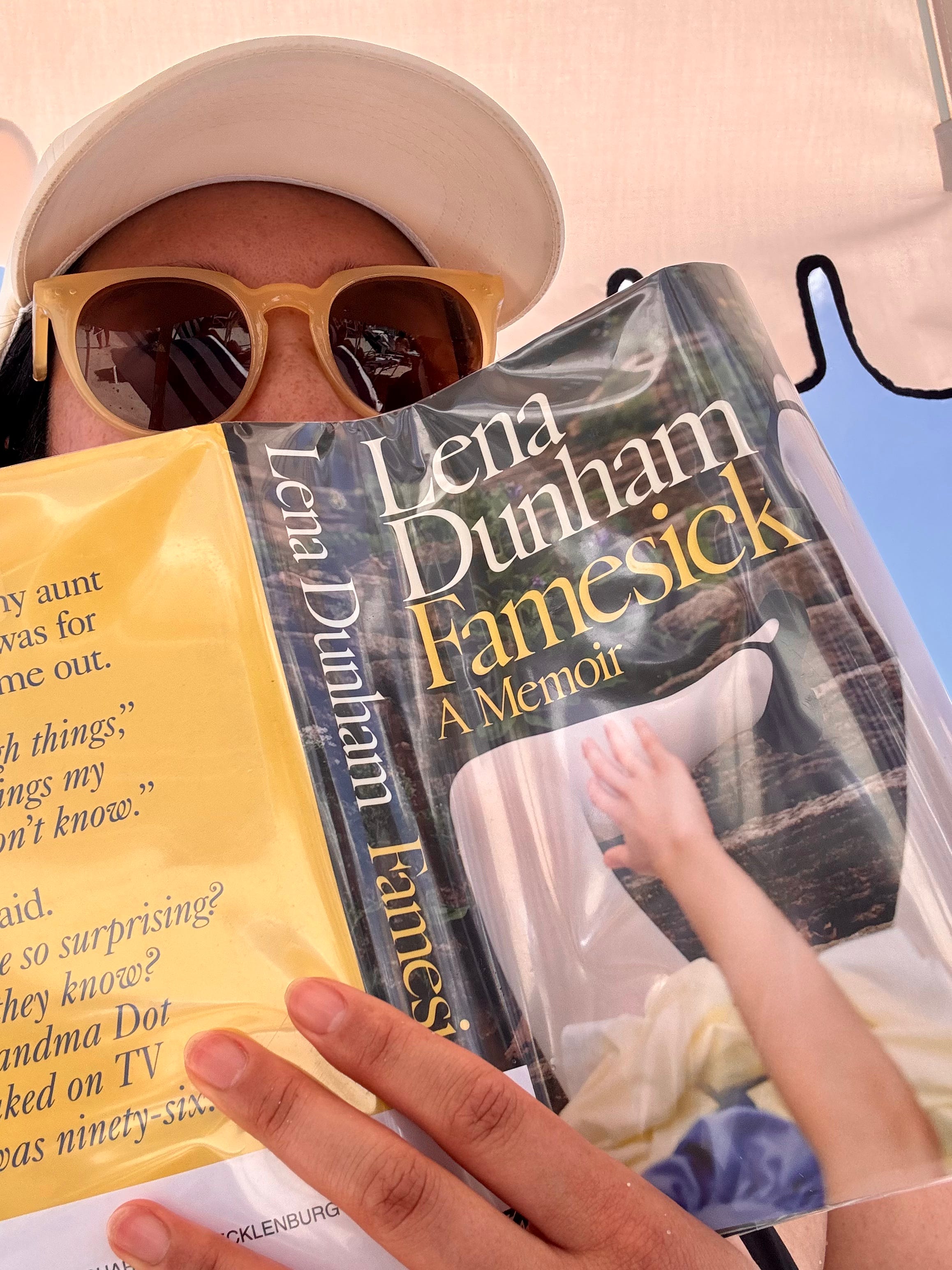
Today’s newsletter: My thoughts on Famesick, and the price of becoming famous before you're fully formed. Plus: Zeitgeist-y!
Sex and the City was more my speed, though I started watching when I was closer to the age as the girls in Girls.
The SATC women on the other hand were older by about a decade.
They represented an ideal, and I was more aligned with their energy, gusto, and ambition.

I wanted that representation of living in New York City.
And I got it.
I became a writer with her own one-bedroom apartment in the Upper East Side.
I’ll never forget sitting at my nook desk, which shared a wall with my small windowed galley kitchen, and being brought to tears after signing my first book publishing deal.
And no, I did not store sweaters in my stove; I actually used it! For roasts, toasts, and casseroles.
I’m Shindy. I sold my financial content company and now I write this weekly culture, money, and lifestyle Substack. I’m a journalist and bestselling author featured in Forbes, The Wall Street Journal, Business Insider, Bankrate, Cheddar TV, and HuffPost. If you haven’t yet, and would like to join more than 7,200 people on the internet who are interested in my weekly takes, then tap this button right hee-ya:
Mostly, I couldn’t relate to Hannah Horvath and her friends because of two main reasons:
First. I never had roommates the whole time I lived in the city.
I’m super fortunate about that.
The roommate dynamic and proximity to her friends were major throughlines in Girls that I simply didn’t resonate with.
Second. I’m a die-hard Manhattanite. They were Brooklynites.
I vowed to myself that if I was ever going to live in New York City, then dammit I was going to live in Manhattan.
For me, there was no other way.
Getting me to another borough is not unlike when Miranda makes the tough decision to leave the island for a new family home in Brooklyn with Steve and Brady.

It’s silly, really, because nowadays, in any other city, driving five to 20 minutes is waaaay longer than the sliver of river between Manhattan and other boroughs.
As I finished the pages in Famesick, I found myself incredibly empathetic toward this polarizing famous person.
After Belle Burden’s Strangers, it became clear that a majority of people do not believe the uber wealthy are capable of feeling pain, or have any real problems deserving of empathy.

The vitriol is amusing, and I always go back to the saying, “Critique is a mirror.” The outrage is the tell.
Though I started Famesick for the culture, I ended it genuinely impressed that anyone could be that open about themselves.
Truly, by the end, I don’t know if there’s anything else we don’t know about her.
That’s the price of fame I suppose, especially when you’ve spent most of your young adulthood naked onscreen for millions, and under the ensuing tabloid microscope.
Could you be as brave?
I doubt it.
I was also able to get over whatever reservation I had about Girls, and started watching it, alongside jotting down these 12 thoughts I had while reading Famesick:
(If you haven’t read the book, know that there are no major spoilers ahead but I do discuss a few elements about certain life events and the people around them):
She’s a nepo-baby. You may not group Lena Dunham among the Kaia Gerbers or Hailey Biebers of the world, mostly because she became famous before the term “nepo-baby” was de rigeur.
But she is one and she admits it. Lena’s father is artist Carroll Dunham (if you’re curious, check out his artwork: NSFW warning) and her mother is photographer and filmmaker Laurie Simmons, whose work is displayed in public collections at the Met, MoMA, Guggenheim, and LACMA, among others.
Laurie introduced Lena to her first agent, a family friend. Young people don’t just phone up agents and get representation. This was a crucial segue and access to Lena’s fame and success. Her parents offer great insight into how and why Lena is Lena.Jack Antonoff seems nice enough. Lena sings his praises as a generous boyfriend and eager-to-please person. She hints that he’s a flirt. She shares his reactions to her ongoing chronic illnesses. If you’ve been on either side—you’re the sick one, or you love a sick person—then this will make you wince.
Where would she be without all the drugs? We’ll never know. Drugs numbed her; allowed her to, as Taylor Swift sings, “do it with a broken heart,” but also with a broken mind and body.
Real-life Adam Driver is just as complex and unpredictable as Adam in Girls.
She went straight from the Met Gala back to rehab. Her description of the other patients took me back to the comical aspect of the characters in Orange is the New Black.
Her Girls co-showrunner is an executive producer of Nobody Wants This. Lena’s relationship with Jenni Konner, from work friends to close friends to back to work friends to no longer friends, is the most dissected in the book.
Lena is clearly in pain about this loss, like those of us who grieve the memories of former best friends. Jenni seems like the all-business, pragmatic bigger sister who finally lost her patience.
Who could blame her? Lena admits herself, she has damaged many relationships.Chronic pain, surgeries, addiction, and trauma. If these subjects are triggering to you, then best to avoid this book. I found it brave that she wrote about her hysterectomy, endometriosis, being diagnosed with the rare Ehlers-Danlos syndrome, and other body ailments in so much detail, but I suppose she felt she had to, to overcome and respond to all the comments about her weight and public behavior.
No advocacy for her health and wellbeing. Neither she, nor anyone else, really, advocated for her health while she was working on Girls. Sad.
Nick is a mess, but we’ve all dated boys just as messy. Haven’t we? After Jack, Lena dated a guy (named Nick in the book), who she knew from childhood, but with his own set of problems. Mentally unstable. Recurring seizures triggered by alcohol, yet continues to drink.
I love her comparisons between New York and LA. If New York is loud and relentless, then “LA was just very bright.”
Who is “American Hugh Grant?” Early on, she mentions running into this person at the nascent part of stardom, and how flirty he is. I’m so curious who he is!
She’s deliberate about who she names and doesn’t name. I like her choosy-ness here, in how careful she is about exposing some versus others, especially because it took her 10 years to write this book, according to her New Times Magazine interview.
Hollywood’s culture has always been permissive toward everything but human frailty. Cruelty in the name of achievement was…justified, but stopping in the name of grief, pain, or simple fatigue was not.
— Lena Dunham
Will you be reading Famesick?
Or have you read it? What did you think?
📺 I’m watching:
Backrooms, in theatres
Not a “scary” movie per se, more like a creepy one that stays with you because of its unsettling and disturbing imagery or should I say mise en scène in film speak, throughout. I got David Lynch “Twin Peaks” vibes and you will likely go down a Reddit-hole for answers. Is it a commentary on the warped interpretations of AI? Of letting unresolved trauma consume you? You be the judge.
Faces of Death, streaming
Starring Euphoria’s Barbie Ferreira and Billy (Dacre Montgomery) from Stranger Things as the villain, this wasn’t awful. It’s actually a pretty fun commentary on the worst, depraved aspects of social media culture. It’s not a documentary nor a remake; perhaps the most interesting fact is when they reveal that much of the original was faked. Who knew?
📚 I’m reading:
Yesteryear, Caro Claire Burke
I started. I’ll report back.🤨Whistler, Ann Patchett
Also started – yes, I can read more than one book at a time 🐴
**
Until next time,
Shindy
On Instagram + TikTok
***


American Hugh Grant = John Cusack 😎